Automated analysis and reporting for robotics test data
Upload field test data in any format. Get automated reports, regression checks, and root cause analysis, in minutes. Query your entire test history in plain English.
What you can do with Alloy
Everything between raw field data and a shareable report — automated.
Natural language queries over test data
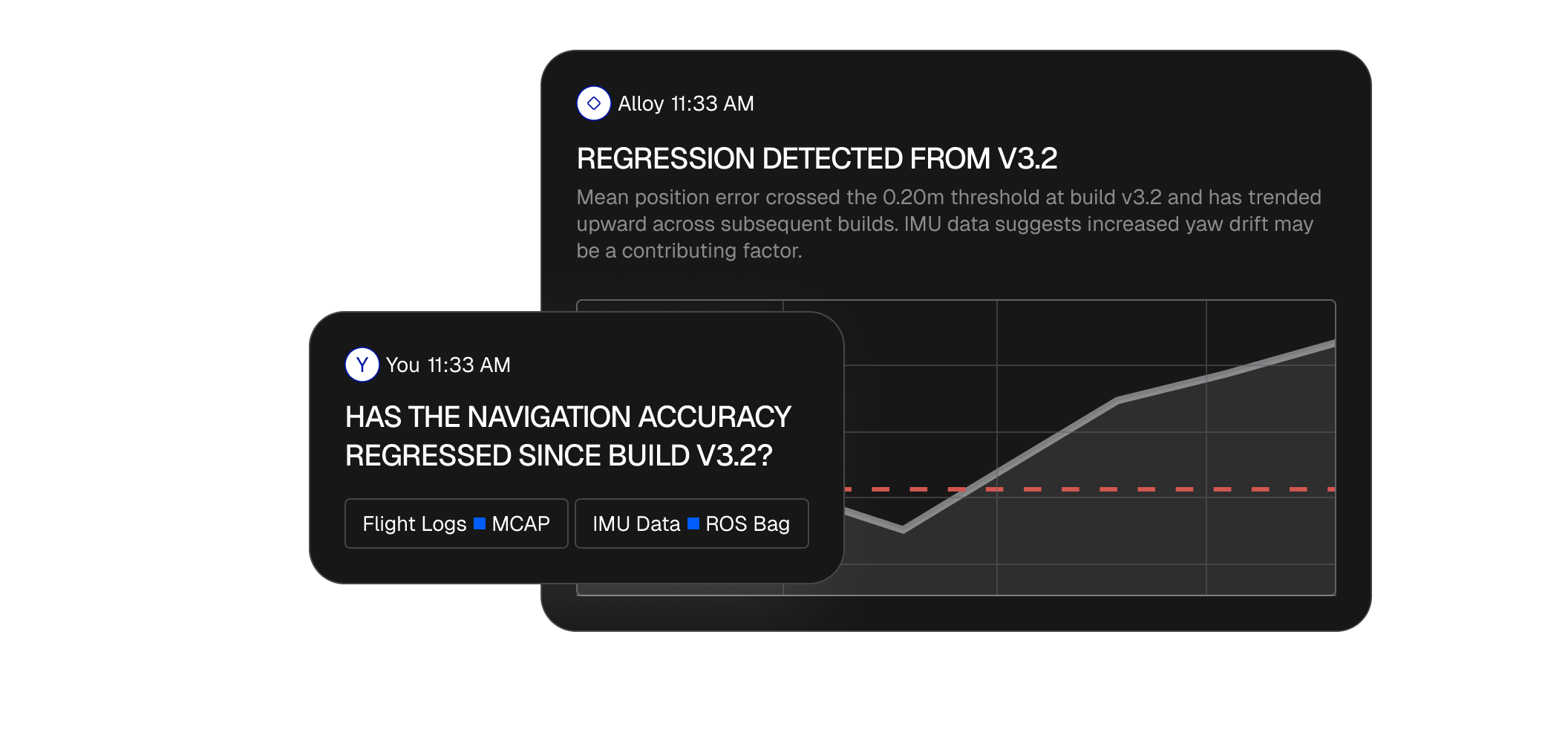
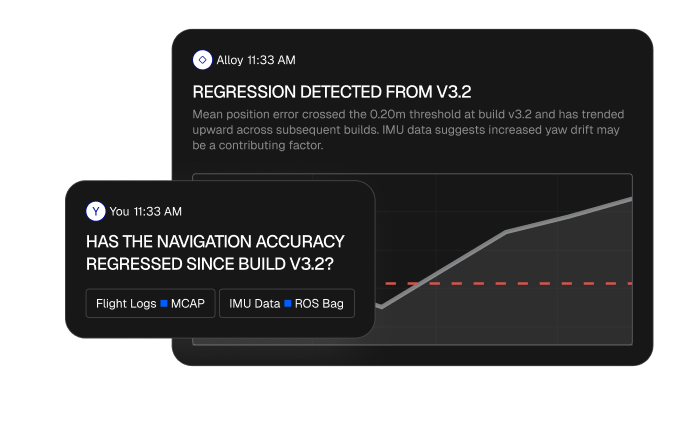
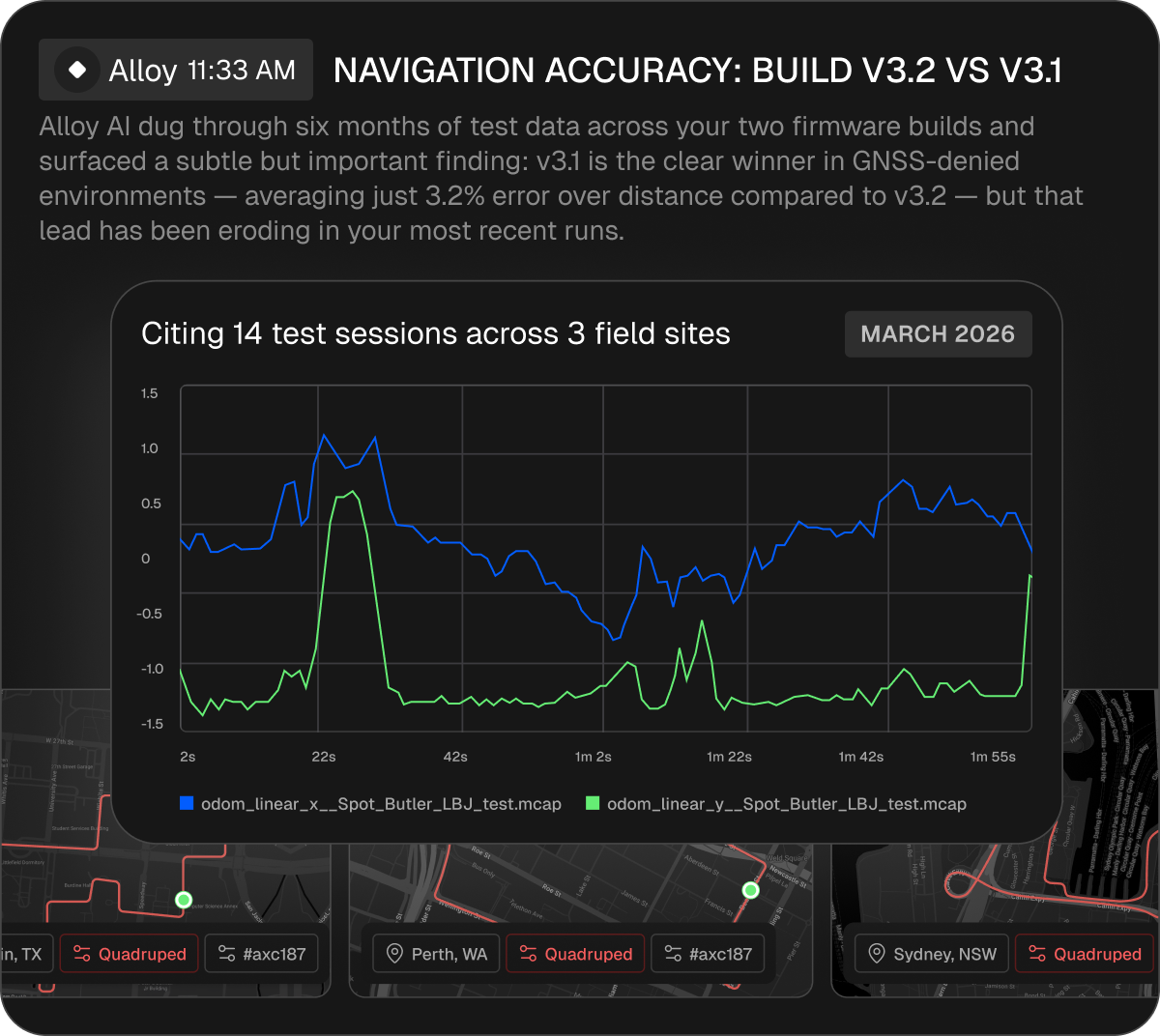
Ask questions across your full validation history. Compare builds, find regressions, investigate anomalies. Alloy returns cited answers you can verify.
Automated mission reports
Every upload generates a structured report like error analysis, cross-test comparisons, performance metrics. Share the link directly with stakeholders.
Regression detection
Track performance across software builds and device configurations. Surface regressions automatically instead of discovering them in the field.
Root cause analysis
Investigate failures across your historical data. Alloy correlates signals, identifies patterns, and traces issues to their source.
Searchable test library
Every validation becomes a permanent, indexed record. Find past tests by device, build, date, or condition without digging through file paths.
Any data format
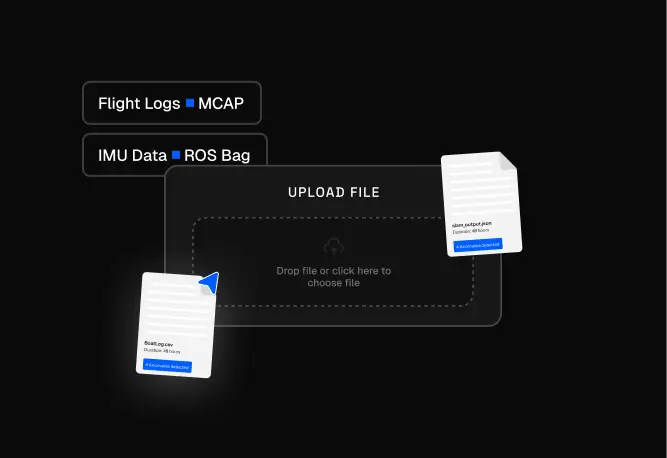
ROS bags, MCAP, custom binary, CSV, Parquet — Alloy ingests robotics data in any format. No conversion scripts.


Three steps, no setup overhead
step one : Upload
the field
Push data directly from the robot, the lab, or the office. Any format. Customise it as required. Runs automated.
step Two : Report generated

Alloy processes uploads and generates analysis within minutes. Share report links with others. Your library of field reports.
step Three : query answered

plain English
Ask anything across your test history. Alloy runs the analysis and cites its sources so you can verify every answer.
Measured impact from validation teams using Alloy


5X
more tests per week
0
scripts to maintain
45s
to create reports with references from your data

1
source of truth
Stop maintaining your analysis stack
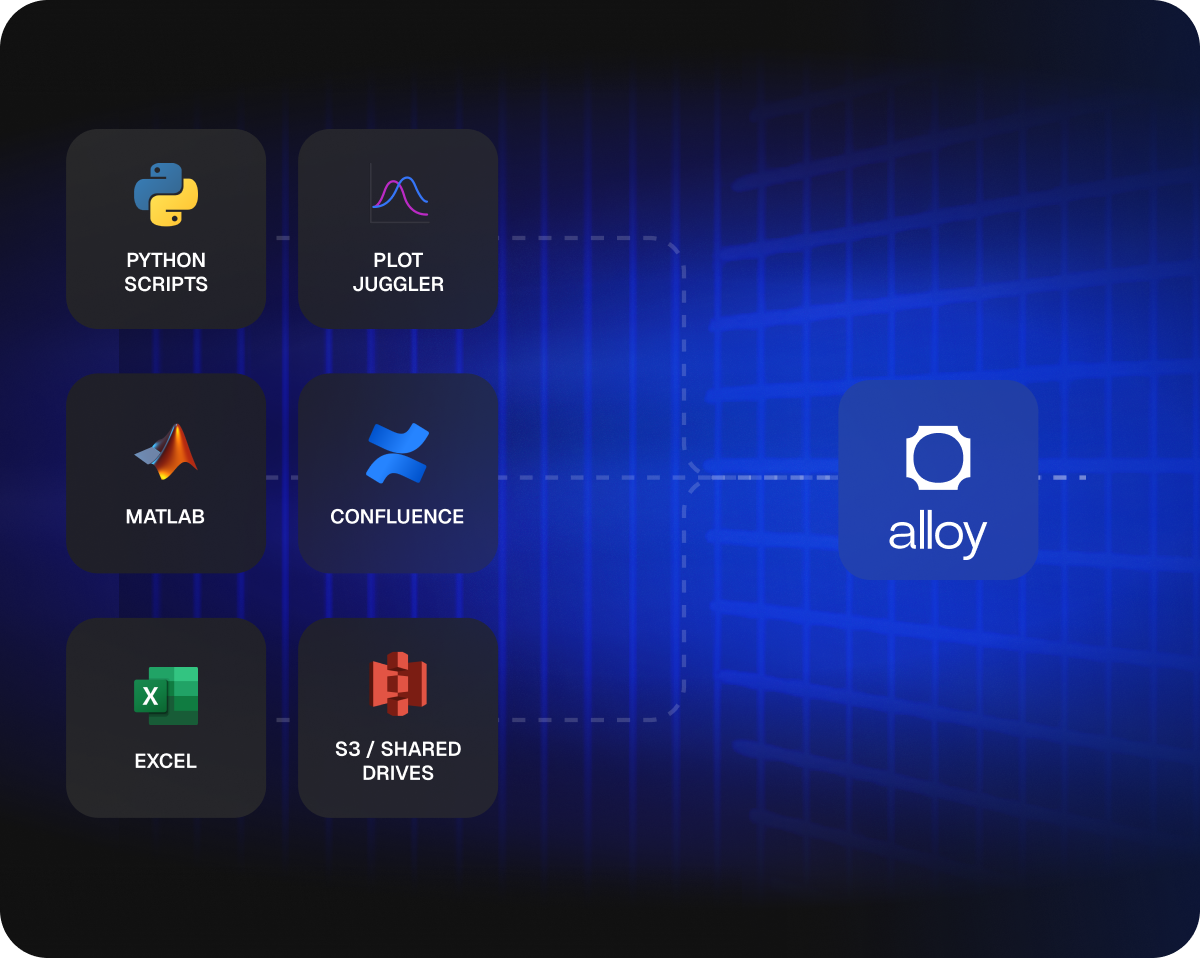
Every validation team builds some version of this stack. Scripts for processing, tools for plotting, wikis for reporting. Alloy handles all three.
.png)

Custom Python scripts
Coordinate transforms, error calculations, chart generation. Handled automatically on every upload.
PlotJuggler / RViz / MATLAB
Single-run tools that require manual setup. Alloy generates visualisations across your full test history.
Confluence / wiki / Excel
Alloy reports are shareable links. Stakeholders explore them directly. No more building wiki pages.
Works across all industries
If your team runs field tests and validates system performance, Alloy handles the data pipeline from test to insight.



Validate perception, localisation, and navigation across thousands of route-hours. Compare sensor fusion performance across builds and driving conditions.

Analyse flight stability, GNSS accuracy, and payload performance across environments. Track regressions across firmware versions and airframes.

Fleet performance, navigation accuracy, regression testing across layouts.

Frequently Asked
ROS bags (.bag, .db3), MCAP, Parquet, CSV, JSON, custom binary formats, and more. If your robot produces it, Alloy can ingest it. No conversion scripts or preprocessing required.
Yes. Alloy is built for robotics-scale data. Storage is backed by Cloudflare R2 with no egress fees, so you are not penalized for querying your own data. The more data you upload, the more useful the search and analysis becomes.
Yes. Alloy is SOC 2 Type II compliant. Your data is encrypted in transit and at rest. Data is never shared across customers or used for model training.
Upload your first dataset and get a report within minutes. There is no lengthy onboarding or configuration process. Alloy reads your data formats automatically.
Foxglove is a visualization tool for inspecting individual recordings. Alloy is an analysis platform that works across your entire test history. You upload data, Alloy generates reports automatically, and you can query across hundreds of past runs in plain English. They solve different problems.
Alloy replaces the custom scripts, manual charting, and wiki-based reporting that most validation teams maintain. It works alongside your existing infrastructure. You can keep using Grafana, JIRA, Slack, or S3. Alloy connects to what you already have.
Yes. Reports are shareable links that anyone can explore. Product managers, leadership, and sales teams can query data in plain English without needing to know Python, MATLAB, or ROS tooling.
