How Puralink got robot data off the base station and into the hands of the whole team
How Puralink's engineering team went from manually transferring files between robots and laptops to querying mission data from their browser.
Impact at a glance
6-8 hrs/week8 weeks8 usersManual data transfer work replaced by auto-uploadFrom kickoff to team-wide adoptionFrom power users to first-time queries, all on the same platform
The Company
Puralink builds the Ferret, an autonomous robot that crawls through underground pipe networks to inspect infrastructure that most people never think about until it fails. The Ferret captures HD video, LiDAR scans, and spatial mapping data as it navigates corners, intersections, and vertical shafts up to a kilometre from a single access point. Their customers are the contractors and utilities responsible for keeping wastewater, stormwater, energy, and mining pipe networks operational across Australia.
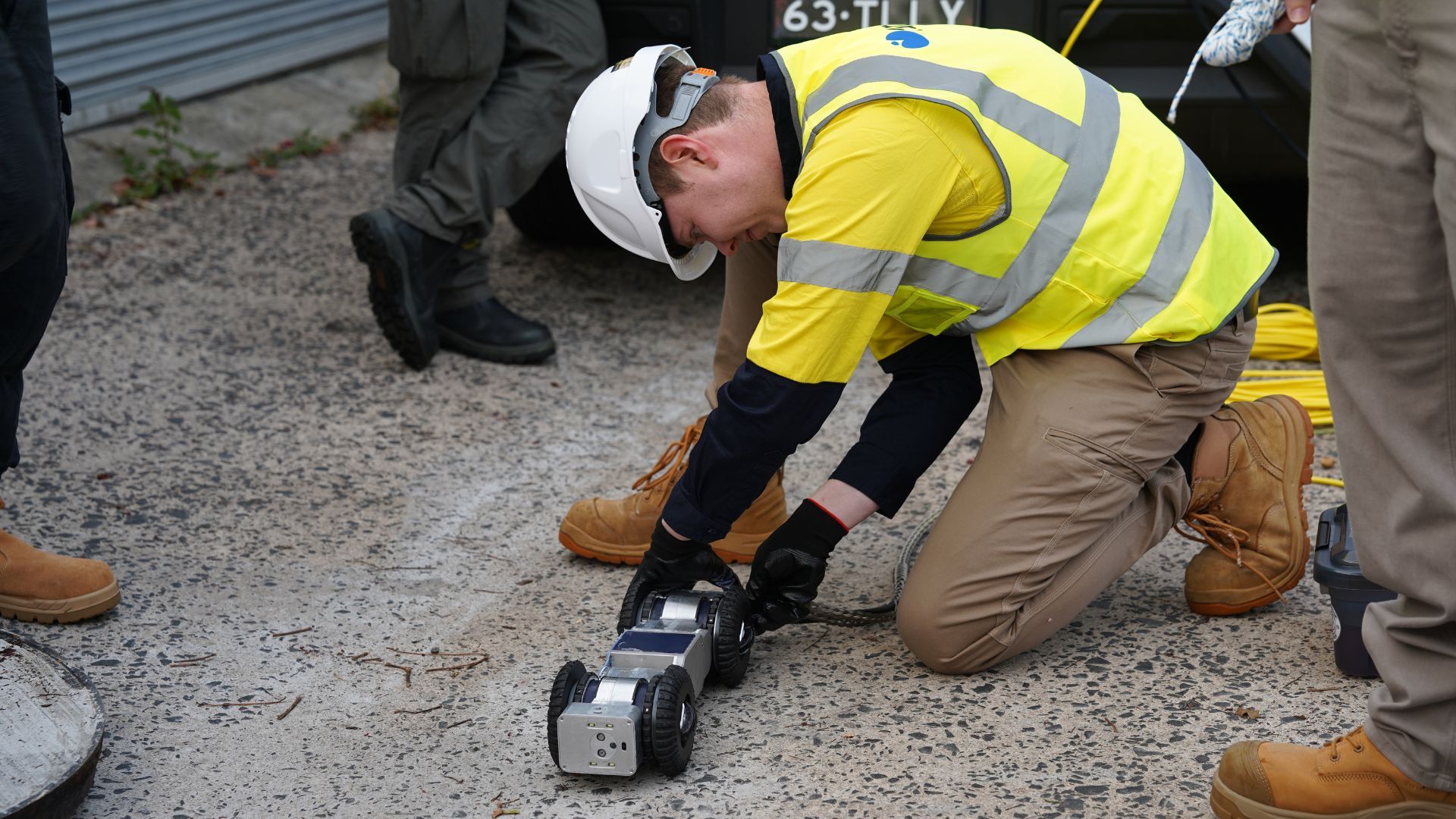
The company is scaling fast. After closing a $2.3 million seed round in late 2025, Puralink moved from R&D into live customer deployments through a Design Partner Program that is now fully subscribed for 2026. With every new deployment, the volume of inspection data multiplies: video, depth imagery, IMU telemetry, battery diagnostics, CAN bus readings. And every gigabyte needs to get off the robot, into the cloud, and into the hands of the people who need it.
Matt Spender is a Robotics Systems Engineer at Puralink. He takes the Ferret into the field, runs inspections, and makes sense of what the robot saw. His ability to diagnose issues, validate performance, and share findings with the rest of the team directly determines how fast Puralink can iterate on their product and respond to customers.
We do a run, we don't see what's on the robot until after we pull it off the robot. Being able to just see it all there, all the data at once, check those statistics like the battery, see what's running, what's not working, check the IMU data, see the camera footage.Matt Spender, Robotics Systems Engineer, Puralink
The Problem
Puralink's engineering team is exceptionally capable. They built an autonomous robot that navigates pipe networks no other system can reach. But the process of getting data off that robot and into a usable state was held together with manual steps and workarounds.
After every inspection run, the CTO would manually access the base station, format the raw recordings into the correct MCAP structure, transfer them onto a USB drive, and physically hand that USB to the team's full-stack developer for the data platform. Between the two of them, this process consumed six to eight hours per week, and that was during lab testing, before the volume of customer deployments ramped up.
The data transfer pipeline they had built on AWS Greengrass was unreliable. Greengrass was designed for IoT devices, not for robotics-scale file transfers. The file sizes and protocols weren't built for multi-gigabyte MCAP recordings. Files would silently fail to upload, or arrive corrupted with no notification. As Kyle Todd, Puralink's full-stack developer, put it: "It doesn't really let us know that it's failed to push up a file, or just pushed up a corrupted file and thought it was all okay." In a business where a lost inspection run means lost revenue for the customer, silent failures were a serious problem that would only get worse at scale. "If customers are losing their runs, that's a lot of money they're going to be losing out on."
Even when the data did make it to the right place, only two people on the team could actually work with it. Matt would have to SCP files to his laptop, open them in RViz or Foxglove, and manually scroll through logs searching for errors by component name. Nobody outside engineering could touch the data at all. For a team preparing to deploy robots to customer sites across Australia, this bottleneck was about to break.
What Changed
Over an eight-week design partnership, Alloy replaced the manual pipeline with Mesh Storage.
Getting data off the robot
Alloy's edge agent runs as a Docker container on the base station. It watches a recording directory and automatically uploads MCAP files to Mesh Storage. No formatting step. No physical handoff. If an upload fails, the agent retries and surfaces the error. The data that used to take a day of manual handling is now in the cloud before the team leaves the site.
Making it visible to engineers
Every MCAP file in Mesh Storage is immediately replayable from the browser. Camera feeds, depth data, IMU, CAN bus telemetry, battery voltage, joint states: all inspectable without downloading anything locally.
Matt used to SCP files to his laptop and run RViz or Foxglove to review point cloud and depth data. Now he opens a browser tab. During one field deployment, an operator reported the pipe appeared to be going upward. Matt opened the recording in Alloy, checked the IMU and mapping data, and confirmed the pipe was going down. Resolved in minutes, from his laptop, without pulling a single file.
The data is also queryable via SQL (DuckDB, Spark, Trino) and accessible to AI tools via MCP.
Opening it up to the whole team
Puralink's team lives in Notion. During one of the weekly calls, the team connected an Alloy agent to their Notion workspace. Setup took minutes, not days.
The result: any team member can query robot mission data in plain English from inside the tool they already use. No new platform to learn. No command-line access required. As Matt recounted: "Morgan, who hasn't really had to look too much at the data, for the first time had to look at the data and so he gave it a try and he was like, 'oh, this is actually pretty cool.'" Charlie, an intern, used it to independently resolve a field issue without asking anyone how to navigate the raw files.
Before this, only Matt and Long could work with the data. By the end of the partnership, eight of eleven team members had used the platform.
This is much easier than going through logs.Matt Spender, Robotics Systems Engineer, Puralink
The Impact
Before AlloyWith AlloyData transfer workflowCTO formats MCAPs, transfers via USB, hands off manuallyAuto-uploads from base station, everyone has accessTime spent on data pipeline6-8 hours/week (two engineers)MinimalWho can access mission dataMatt and Long (command-line only)8 team members, from engineers to non-technical staffDiagnostic workflowSCP to laptop, run RViz locally, scroll through logsReplay and inspect from browserFirst investigation for new team memberNeeds training on command-line tools and file locationsQuery from Notion on first try
The numbers tell the efficiency story. But what matters more is what the team can now spend their time on.
- Field issues get resolved in the browser, not at a workstation. The investigation that used to start with "let me SCP that to my laptop" now starts with a click. No file transfers, no switching machines, no loading local tools.
- The whole team has eyes on the data for the first time. Before Alloy, robot data was locked behind command-line access that only two engineers knew how to navigate. Now, eight people across the team (engineers, interns, and non-technical team members) can query and explore mission data from the tools they already use.
- The build-vs-buy question answered itself. As co-founder Shyeon Delnawaz put it: "Engineers just love to say 'now we can build that' or 'no, I don't need to expand that.' So what I'll be doing is actually challenging them on the efficiency and the time it'll take them to build and maintain stuff." Eight weeks in, the team was using Alloy instead of maintaining their own pipeline.
The Trajectory
Within eight weeks, Puralink went from two engineers manually transferring files via USB to eight team members using the platform. The partnership started with a broken Greengrass pipeline and ended with an intern independently resolving field issues through a browser-based workflow.
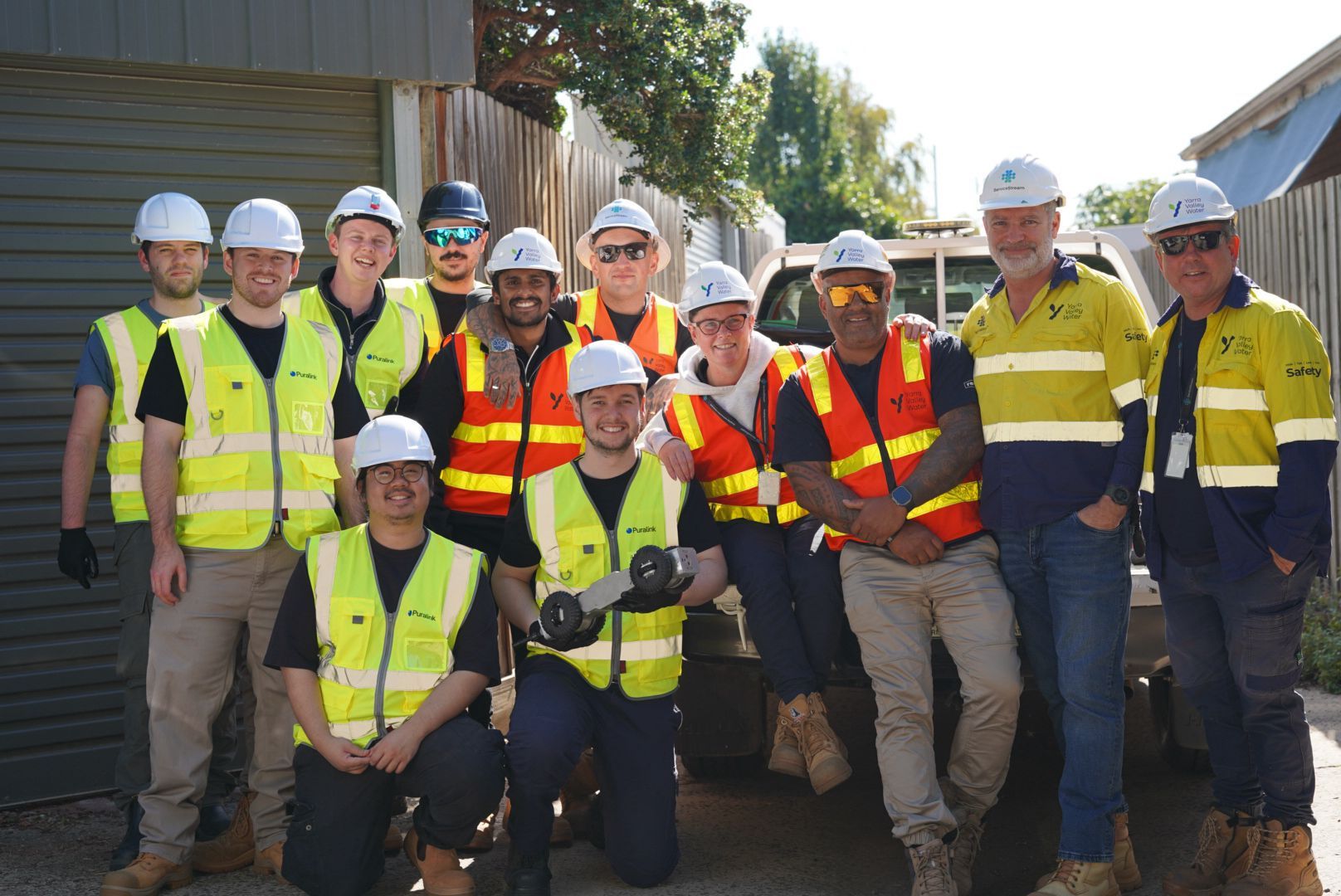
Puralink is preparing for additional customer deployments in the second half of 2026. As each new Ferret goes into the field, the volume of inspection data scales with it. And so does the value of having it automatically captured, stored, and queryable.
We've liked working with you guys. What you're building is very cool, and it's been very useful internally. Keen to progress it forward.Shyeon Delnawaz, Co-Founder, Puralink
See what 10× faster analysis looks like
Book a demo to see how Alloy works with your data.
