Comparison

Alloy vs Claude Code

Claude Code is your best engineer's setup. Alloy is that setup for the whole team, and nobody on your team has to maintain it.

Alloy gives engineering, support and field teams one agent built for robot data, a shared knowledge base that every investigation writes to, and a review of every new run without anyone asking. Already using Claude Code? Connect it to Alloy over MCP, and keep both.

Last updated

AndromedaAlloy answers the help desk first

Alloy

Alloy is the AI Robotics Engineer. Its agent investigates robot data across your whole fleet, alongside your tickets, code and runbooks, returns a likely cause with the evidence behind it, and writes what it learns into a knowledge base your whole team shares.

Best for

Choose Alloy when investigating robot behavior is a team job, and the fixes can't keep living in a few people's heads.

Claude Code

Anthropic's coding agent works in an engineer's terminal. Given files and a clear question, it writes the code to parse them and reasons about what it finds.

Best for

Choose Claude Code to write and debug software, and to work on the robot data one engineer already has on disk.

Alloy and Claude Code at a glance

Buyers compare eight things. Here is what each one leaves your team, and your engineers can keep Claude Code alongside Alloy.

What you needAlloyClaude Code
Agent-nativeBuilt agent-first for robot investigations: the data layer, tools and knowledge base exist so the agent can finish the job.A general agent. Your team builds the robotics harness around it.
Knowledge baseShared by the whole team, written by the work, readable and linked to evidence.One engineer's memory files, on one machine.
What a session leaves behindA likely cause, every finding linked to its evidence, a next step and a report the team keeps.An answer in one engineer's session, saved wherever they put it.
Check every new runReviews every new run and checks for known failure patterns, without anyone asking.Runs when someone opens a session.
Scale across the teamSupport, field, validation and engineering work one investigation, in Slack, Jira and the web app.The engineer running the session.
Data it starts fromEvery run, searchable across the fleet in the cloud or your own store. Nothing to download.Files someone finds and downloads for each session.
Keep it workingAlloy maintains the models, providers, integrations, tools and evals.Your team does.
Roll it outForward-deployed engineers set it up with you and help the whole team adopt it.Your team sets it up.
Time to a first answerValue in week one, often day one.Every session starts from zero. Find the files, download them, rebuild the context.
Agent-native, and built for robots

Claude Code is a strong coding agent. Alloy was built agent-first for one job: robot investigations. Its data layer, tools and knowledge base all exist so the agent can read your robots' logs, telemetry and missions and finish the job. It is not a viewer with an agent added, and it is not a general agent your engineers have to build a harness around.

That harness is where the work is. In Alloy, the agent reads MCAP, ROS bags, flight logs and telemetry, aligns time across sensors, and runs its analysis in a sandbox. It queries a whole fleet in one question, with your tickets, code and runbooks next to the logs. A team that wires a general agent to its own data meets each of these problems one at a time.

We publish the proof. The Robotics Engineering Benchmark shows how frontier models perform on real robot investigations inside the Alloy agent, with score, cost and speed for every setting.

Ask Alloy
Find every run this month where the left wheel ignored a steering command, and show me what the runs have in common.

Solve it once. A knowledge base the whole team shares.

The best personal setups we see are impressive. One engineering lead walked us through theirs: Claude Code connected to the company's databases, clusters, cloud accounts, Jira, Slack and Confluence, with a memory file updated after every debugging session. Their verdict: "It works really well for me, but it doesn't scale to the team."

That memory belongs to the person who built it. The next engineer who meets the same fault starts again, or waits for that person. At fleet scale, that is the bottleneck: each new deployment brings more field issues, and the fixes live in a few people's heads, or on their laptops.

Alloy keeps a shared knowledge base for your team: known issues and the fixes that worked, who to escalate to, notes your team asks it to remember, the scripts you trust, your runbooks and every past report. The work writes it, so it doesn't go stale. When the agent is wrong, correct it in the thread and ask it to remember. The next answer uses the correction, for everyone.

Teams see it in their numbers. At Andromeda, duplicate tickets went down, and so did the time to resolve bugs the team had seen before.

Judge it by what you have when the work is done

A Claude Code session leaves its answer with the engineer who ran it, wherever they put it.

An Alloy investigation leaves a likely cause, each finding linked to its evidence down to the moment in the recording, and a next step. When the data can't confirm something, the agent says so. A report is an asset: the team can read it, comment on it and share it, and the agent finds it again. Months later, when the fault comes back, the agent finds the report, the ticket and the fix.

Ask Alloy
Has this brush over-current fault happened before? If it has, show me the fix that worked and the recordings that prove it is the same fault.

It finds what nobody told it to look for

A Claude Code session runs when someone opens it, and looks where it is told to look. One engineer who built their own Claude setup was clear about its limit: it wasn't analysing every new recording as it came in, though "certainly we could set up a service to do that."

Alloy already does. A recurring report gives every new run a first review against your team's own checks, and writes up what stood out, even when nobody told it what to look for. A scenario is a failure pattern you describe once in plain words: Alloy checks every new run for it and searches back up to 90 days. Only the robots that need a person reach your team, before the field reports the problem.

Ask Alloy
Check every new run from the fleet for this failure, and tell me which robots need a person.

One investigation for the whole team, not one engineer's private setup

Claude Code works in a terminal, for the person at the keyboard. Most field issues don't start there. They start in a Slack channel or a Jira ticket, raised by someone in support or the field who will never open a terminal.

Alloy works where the whole team works. In Jira, it is a first-line support investigator. In Slack, it works with customer success as colleagues add context. In the web app, it is an engineer's thinking partner. Everyone works from the same investigation and the same evidence, and nobody downloads a large log to a laptop.

This matters most for the people who can't write their own scripts. In one support team we work with, the strongest engineers already had a script for everything. The newer and less technical members had the most to gain.

We maintain it, not your best engineer

Teams that build their own debugging agent start fast. The cost arrives later. A new model ships every few weeks, and someone has to test it on your robot data before switching. A connector that worked last quarter breaks when a vendor changes its API. One CTO who builds their team's tools on purpose put it plainly: "software doesn't last long unless it's maintained."

Then the tools multiply. A validation lead at one robotics company told us her organisation has about ten home-built debugging agents, all in different states of repair, and she doesn't know which of them are reliable or who to call when one breaks.

With Alloy, that is our job. We test new models on robotics tasks and move each job to the model that tests best. We run across more than one model provider, with failover. We maintain the integrations, the log formats, the analysis tools and the security. Your best engineer works on the robot, not on the agent.

Buy the outcome, with people accountable for it

A tool that one enthusiast uses doesn't change how a team works. Our forward-deployed engineers learn which data matters, which checks your engineers trust and where support gets blocked. Together, we connect your data, set up the first investigations, tune them on real issues, and stay until the whole team uses it, not just one champion.

The software is just the delivery mechanism. What you buy is the outcome: investigations that work, kept working by a team whose job it is. Teams get value in their first week, often on day one.

Keep Claude Code. Give it your robot data.

Alloy doesn't replace Claude Code. Its MCP server gives Claude Code the same robot data and tools your engineers use in Alloy. Alloy finds the likely cause and the moment in the recording. Claude Code helps write the fix. Alloy checks the next runs for the same fault, and the case goes into the knowledge base.

DroneForge runs this loop with a coding agent across 300+ deployed drones: "Codex helps us solve the problem in front of us. Alloy turned that into recurring analysis that keeps tabs across the fleet at all times."

Ask in Claude Code with Alloy connected
Pull Alloy's findings on last night's wheel-delay runs, then find the code path that handles the steering command and propose a fix.

Test it against your own Claude Code setup

You can find out in a week. Use a real issue and your own setup, not a demo dataset.

  1. Pick the issue that keeps reaching your senior engineers

    Choose one recent issue that pulled an engineer into evidence gathering. Note how long it took, and who could have done it instead.

  2. Run it through Alloy, with Claude Code connected

    Our engineers help you connect the data and the tools you already use. Your engineers keep working in Claude Code over MCP.

  3. Check it, correct it, ask a teammate

    Check each finding against its evidence. Correct the agent and ask it to remember. Then have someone else on the team ask the next question.

Measure what your team has at the end of the week, not just what one engineer found.

When to choose Alloy or Claude Code

Choose Alloy when

  • Field issues keep pulling experienced engineers away from planned work.
  • Support, hardware and software teams need to work from the same evidence.
  • Your fleet produces more runs than people can review.
  • You want what your team learns to stay when people change roles or leave.
  • You want a maintained system, and engineers to help you roll it out.

Choose Claude Code on its own when

  • You have one robot, a few logs and one engineer who answers every question.
  • You want to build and run your own debugging system, and you have engineers to spare to keep it alive.

Use both when

Your engineers want Claude Code on the codebase with Alloy's robot data and tools over MCP, while Alloy runs the shared investigations and the checks on every new run.

What teams have achieved with Alloy

Published results from teams running Alloy in production.

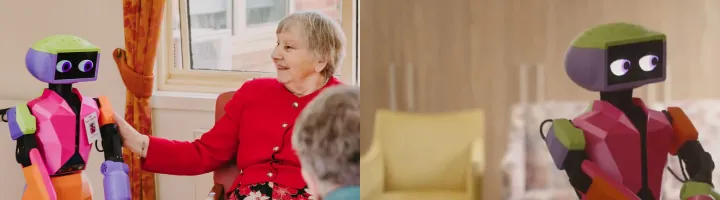
Andromeda's team and their Abi companion robot
Help desk

2 days→10 min

Investigating one fleet-wide audio bug

Alloy answers the help desk first

Alloy runs the first investigation on around 200 help desk conversations a week, so L1 and L2 support no longer waits on an engineer.

Flight data from DroneForge's drones flowing into analysis and code
DroneForgeFlight review

3x faster

Development loop: flight, investigation, code change, check

Alloy and a coding agent, working together

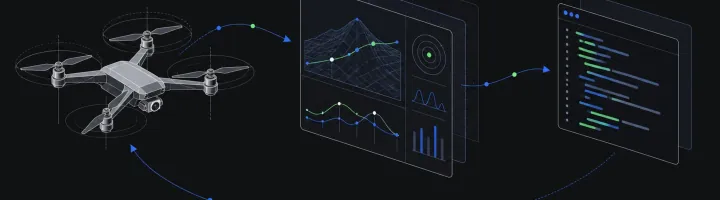
Across 300+ deployed drones, DroneForge moves from a customer flight to an investigation, a code change and a check against future flights.

SwarmFarm's autonomy team and one of their farm robots
SwarmFarmField support

1 day→< 1 hour

Support investigation

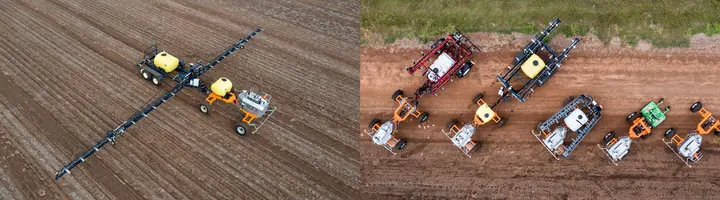
Support grows with a fleet of close to 300 robots

A senior autonomy engineer's own estimate, a year apart. Support capacity now grows with the fleet, not the engineering team.

Questions teams ask before choosing Alloy

Why buy Alloy if our engineers can build this with Claude Code?

They can start one. The hard part is keeping it working for the whole team: data connections, the evidence behind each finding, recurring checks, model changes, and a knowledge base everyone can read and correct. Alloy takes that on, with engineers who help you roll it out. Teams that build their own end up with several debugging agents in different states of repair, and nobody sure which one to trust.

Does Alloy replace Claude Code?

No. Claude Code stays where your engineers write and debug software. Alloy provides the robot data, the shared investigations and the checks on every new run, and its MCP server makes its tools available to Claude Code.

Do people need to move their work into Alloy?

No. Alloy works in Jira, in Slack and in its web app. Your team discusses an issue where it already works, and opens the supporting analysis when it needs to.

How does Alloy keep our engineering knowledge?

In the shared knowledge base. Cases and their outcomes, corrections, saved scripts, runbooks and past reports stay readable and available to the next person and the next investigation. Alloy says when it uses something it kept, so a known issue gets a known answer.

How do you choose the models?

We test models inside the work they will do, for answer quality, speed, cost and tool use, and update the models Alloy uses as new ones are released. Your team changes nothing. The public benchmark shows how frontier models perform inside the Alloy agent.

How long until we see value?

Days, not months. Teams get value in their first week, often on day one. Connect the data you already record, bring a recent incident, and watch the agent investigate it. Our forward-deployed engineers set up the first investigations with you.

What should we measure during an evaluation?

Start with one recurring issue and how your team handles it today, with Claude Code or without. Measure the engineering time spent gathering evidence, the time to a useful diagnosis, the handoffs between teams, and how much of the work someone other than your most senior engineer could do.

Bring the issue that keeps reaching your senior engineers

Walk us through how your team handles it today, Claude Code and all. We'll show how Alloy connects the evidence, writes what it finds into your knowledge base, and turns the repeatable work into checks on every new run.